Tonsil stones, those tiny yet troublesome deposits that can form in the crevices of your tonsils, are more than just a nuisance for many individuals.

Characterized by their off-white appearance, these calcified clusters are not only unsightly but can also cause a host of uncomfortable symptoms, including bad breath, sore throat, and difficulty swallowing. While small tonsil stones may not cause significant discomfort and can sometimes be managed at home, larger accumulations often necessitate professional intervention.
But when it comes to removing tonsil stones, the question arises: should you consult a dentist or another specialist? This article delves into the expertise of various healthcare providers in managing tonsil stones, offering insights into who to turn to for effective removal and prevention. Understanding the roles of dentists, ear, nose, and throat specialists (ENTs), and other professionals in the context of tonsil stone treatment can guide individuals towards making informed decisions about their oral health and overall well-being.
Contents
Understanding Tonsil Stones
What Are Tonsil Stones?
Imagine you're eating, and some tiny food particles get stuck in the back of your throat. Over time, these particles, along with bacteria and other debris, can turn into what we call tonsil stones. They're small, hard, and can be white or yellowish. They form in the tonsils, which are those two lumps of tissue at the back of your throat that help fight off germs.
Why Do They Form?
Tonsil stones happen when bits of food, dead cells, and other junk get trapped in the nooks and crannies of your tonsils. Your body's way of fighting off infections can make these particles harden and turn into stones over time. It's like how a pearl forms inside an oyster!
Symptoms and Troubles
Many people don't even know they have tonsil stones because they can be very small. But if they get big enough, you might feel like something's stuck in your throat, have a sore throat, or notice your breath isn't smelling too great. Some people might also cough up a tonsil stone without even realizing what it is!
When to Worry
Most of the time, tonsil stones are more annoying than dangerous. But if you're feeling a lot of pain, having a tough time swallowing, or if your bad breath isn't going away, it might be time to talk to someone who can help.
Healthy Tonsils, Happy You
Tonsil stones can be a sign that your mouth isn't as clean as it could be. Keeping your mouth clean, drinking plenty of water, and gargling with salt water can help keep those stones from forming. If you do get them, there are ways to safely get rid of them, but sometimes you might need a little help from a dentist or doctor.
Professionals Involved in Tonsil Stone Management
When it comes to getting rid of tonsil stones, you might wonder who to go to for help. Let's look at the experts who can lend a hand.
Dentists
What They Do: Dentists are like the superheroes of teeth and mouth care. They know all about keeping your mouth healthy, which includes dealing with tonsil stones. They can spot these stones during a check-up and might use special tools to gently remove them.
When to See One: If you notice bad breath that won't go away or if you can actually see tonsil stones, it's a good idea to visit your dentist. They can give you tips on how to avoid getting tonsil stones and can help remove them safely.
Ear, Nose, and Throat Specialists (ENTs)
Who They Are: ENTs are doctors who know a lot about the ears, nose, and throat, including tonsils. They're like detectives for any issues in these areas.
Why You Might Visit Them: If your tonsil stones are big, keep coming back, or if you have a lot of pain or other serious symptoms, your dentist might suggest seeing an ENT. These doctors can use special methods to remove tonsil stones and can even talk about ways to stop them from coming back, like removing your tonsils if needed.
Other Specialists
Sometimes, if your tonsil stones are part of a bigger problem, like infections that keep happening, you might need to see your regular doctor too. They can check if there's something else going on in your body that's making you get tonsil stones.
Dental Hygienists: These are the folks who clean your teeth at the dentist's office. They can also teach you how to keep your mouth super clean to reduce the chance of tonsil stones forming.
Finding the Right Helper
Deciding whether to see a dentist, an ENT, or another specialist depends on how much trouble your tonsil stones are causing you. If you're not sure, starting with a visit to your dentist is a good idea. They can guide you on what to do next.
Tonsil Stone Removal Techniques
Getting rid of tonsil stones can be a bit like a mini adventure. Let's explore how you can say goodbye to them, from simple home tricks to professional help.
DIY Removal at Home
Safety First: Before you think about removing a tonsil stone by yourself, it's important to be gentle. Using clean fingers or a soft cotton swab, you can carefully try to push the stone out from your tonsil. But never use sharp objects—that's asking for trouble!
Tips and Tricks: Gargling with salt water is a great way to ease sore throats and might help loosen those pesky stones. Drinking lots of water and staying hydrated can also make it harder for stones to form in the first place.
Professional Removal Methods
Sometimes, those stones can be stubborn, or you might not feel comfortable trying to remove them yourself. That's when professionals step in.
Laser Tonsil Cryptolysis: This sounds like something from a sci-fi movie, but it's actually a way doctors can zap away the crevices in your tonsils where stones like to hide. It's quick and doesn't hurt much.
Coblation Cryptolysis: Another cool technology, this method uses gentle radio waves to shrink the tonsil pockets, making it tough for stones to stick around.
Tonsillectomy: This is when doctors decide it's best to remove the tonsils altogether. It's usually saved for when nothing else works or if you get tonsil stones really often.
What's Right for You?
Choosing the best way to remove tonsil stones depends on how big they are, how often you get them, and if they're causing you trouble. Your dentist or an ENT can help you decide which path is best for you.
After the Adventure
After removing a tonsil stone, keeping your mouth clean is key. Brushing your teeth twice a day, flossing, and regular gargling can help keep those stones from coming back. And always remember, if you're unsure about removing a stone, it's better to ask for help than to risk hurting yourself.
Prevention and Aftercare
Now that those troublesome tonsil stones are gone, you're probably wondering how to keep them from crashing the party again. Here's the lowdown on keeping your tonsils clear and your breath fresh.
Keep It Clean
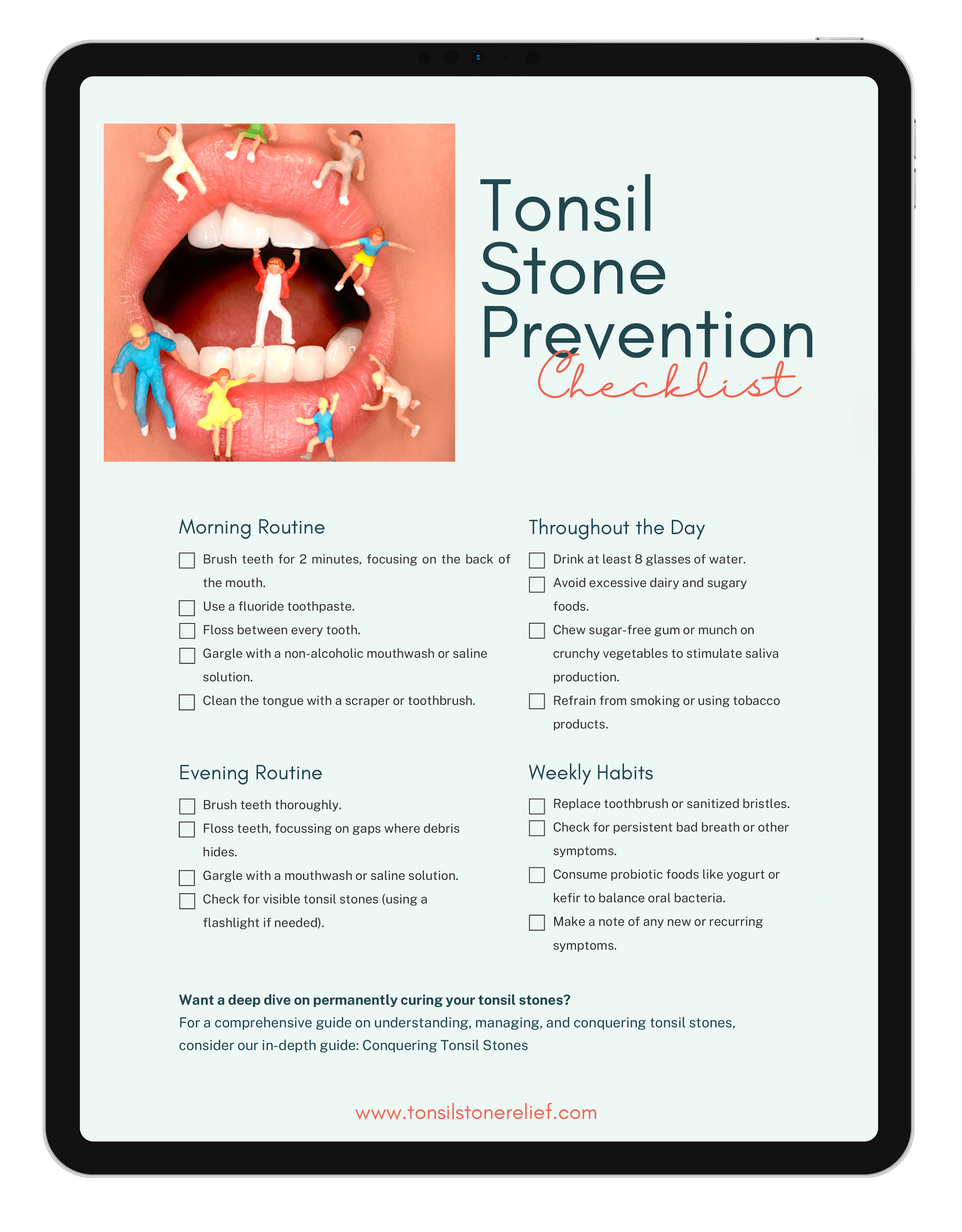
Brush and Floss: The dynamic duo of oral hygiene—brushing twice a day and flossing daily—can’t be beaten. They get rid of the food bits and bacteria that invite tonsil stones to form.
Gargle Away: Make gargling with saltwater or an alcohol-free mouthwash part of your routine. It’s like giving your throat a mini-shower, washing away any leftovers that could turn into stones.
Water Is Your Best Friend
Staying hydrated isn’t just good for your skin and health; it’s great for preventing tonsil stones, too. Drinking plenty of water keeps your mouth moist and helps flush out bits of food and bacteria.
Eat Smart
Foods that are good for your teeth and gums are also good for preventing tonsil stones. Crunchy fruits and veggies help clean your teeth naturally. Try to cut down on sugary snacks and drinks, as they can encourage bacteria to grow.
Regular Check-Ups
Visiting your dentist or dental hygienist regularly isn’t just for keeping your smile bright; it’s also a chance to catch any early signs of tonsil stones or other oral health issues.
After Tonsil Stone Removal
After getting rid of a tonsil stone, you might feel a little discomfort where the stone was. Keep up with your oral hygiene and maybe take it easy on spicy or acidic foods until everything feels back to normal.
Listen to Your Body
If you keep getting tonsil stones even after you’ve been super careful, it might be time to chat with your dentist or an ENT again. There could be other tricks to try or things to do to help keep those stones from coming back.
Keeping Tonsil Stones at Bay
Tonsil stones don’t have to be a regular part of your life. With the right care and a little attention to your oral hygiene, you can keep your tonsils clear and your breath fresh. Remember, if you're ever in doubt or if stones keep coming back, reaching out to a professional is the best step.
Final Thoughts
Dealing with tonsil stones can feel like a never-ending battle for some, but knowing the right steps to take for removal and prevention can make all the difference. Whether it’s deciding to tackle them at home or seeking professional help from a dentist or an ENT specialist, the key is to address tonsil stones before they cause more discomfort or lead to other oral health issues. Remember, maintaining a diligent oral hygiene routine and making regular visits to your dental care provider are your best defenses against these pesky stones.
The journey to keeping your tonsils clear doesn't have to be a solo mission. Dentists and ENTs are equipped with the knowledge and tools to help you navigate this path, ensuring your oral health remains at its best. By taking proactive steps towards prevention and not hesitating to seek expert advice when needed, you can significantly reduce the impact of tonsil stones on your life.